The Women's Health Initiative study suggested that taking estrogen modestly increases the risk of breast cancer in post-menopausal women. But estrogen is a double-edged sword. High doses actually shrink breast cancer! Learn more from my CTV.ca/health blog, originally posted in 2009.
Treating advanced breast cancer: The estrogen paradox
by Dr. Lorne Brandes August 24, 2009
Is anything in science and medicine ever completely new? Occasionally, perhaps, but usually not. As a biblical sage once observed (Ecclesiastes 1:9-14): “What has been will be again, what has been done will be done again; there is nothing new under the sun.”
So, when a new study, showing that estrogen treatment can shrink advanced breast cancer, appeared in this week’s edition of the Journal of the American Medical Association (JAMA), the words of the sage immediately came to mind.
To put the study’s findings into context, we must first review the causal relationship between estrogen and breast cancer.
Large, widely-reported studies have shown that taking estrogen as part of hormone replacement therapy (HRT) significantly increases breast cancer risk. In addition, scientists have repeatedly linked estrogen-driven breast cancer with being overweight. Why? Fat cells produce lots of estrogen that fuels this type of breast cancer. In contrast, drugs (called aromatase inhibitors) that block fat cell estrogen can both decrease the recurrence rate of early breast cancer, and shrink metastases if the disease spreads.
At this point, one would be right to question why, if estrogen often propels the growth of breast cancer, it also can be used in its treatment. It is a paradox to be sure, one that had its beginning in the 1940s, when Sir Alexander Haddow, a brilliant Scottish chemist, first proposed that cancer-causing chemicals themselves might be effective to treat cancer.
Not only did his hypothesis prove to be correct (and became known as “The Haddow Effect”), it led scientists under his direction to discover a series of anti-cancer drugs, themselves carcinogens that are still in clinical use today.
One carcinogen pegged by Haddow as a possible breast cancer treatment was the synthetic estrogen, diethylstilbestrol (DES). Once again he was right. Although the drug was often toxic at the high doses required to be effective, and worked only about one-third of the time, for the next quarter-century it was widely used to shrink advanced breast cancer in post-menopausal women. The “estrogen paradox” was evident even then!
When tamoxifen (itself a weak estrogen that can cause uterine cancer) proved almost as effective as, but significantly less toxic than, DES, it became the drug of choice in the 1980s. DES was ultimately banned in most countries after it was linked to reproductive tract abnormalities, including vaginal cancer in young girls whose mothers took it in pregnancy to decrease the risk of bleeding, premature labour and miscarriage.
Despite the demise of DES, natural estrogens, such as estradiol (contained in Premarin, for example), continue to be approved for use in treating inoperable breast cancer. However, in the “modern era” they have been rarely prescribed for this purpose.
Now, with the just-published study in JAMA, that is almost certain to change.
The study’s rationale stemmed from earlier laboratory experiments with cultured breast cancer cells that could grow in the absence of estrogen (mimicking resistance to treatment with an aromatase inhibitor). It was found that when small amounts of estradiol were now added to the culture medium, the cells died.
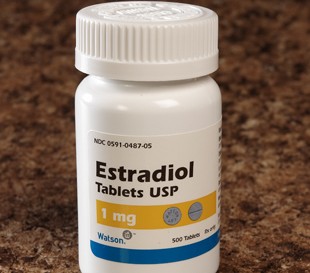
To determine whether these findings might carry over to the clinic, oncologists assessed the effect of high (30 mg) and low (6 mg) daily doses of estradiol on the growth of estrogen-dependent breast cancer in 66 women whose disease had stopped responding to aromatase inhibitor drugs. Consistent with the previous experience with DES, 9 of 32 women responded to high-dose estradiol. What may not have been anticipated, but in keeping with the preceding lab data, an equal number of women (10 of 34) responded to low-dose estradiol, and with significantly fewer side-effects. As a result, low-dose estradiol will be adopted for future studies.
The study additionally found that positron emission tomography (PET) body scans performed twenty-four hours after the first dose of estradiol were highly predictive. Only patients in whom the PET scan detected increased glucose (sugar) metabolism in the tumours (a sign of early growth-stimulation) responded to treatment. In other words, an early stimulation of tumour cells by estradiol was soon followed by the reverse effect (shrinkage or stability of the cancer). A paradox, indeed.
Finally, there was one more bit of icing on the cake: two of seven women regained a response to their previous aromatase inhibitor after the estradiol improvement wore off.
While the study was relatively small and the findings preliminary, I think it is likely that they will quickly change how oncologists treat late-stage estrogen-dependent breast cancer. Since generic estradiol is commercially available and already approved in breast cancer, oncologists can easily prescribe the 6 mg daily dose to women who stop responding to aromatase inhibitors. Moreover, a PET scan performed one day after the first dose will quickly indicate who should continue and who should stop.
Maybe something is new under the sun after all!
by Dr. Lorne Brandes August 24, 2009
Is anything in science and medicine ever completely new? Occasionally, perhaps, but usually not. As a biblical sage once observed (Ecclesiastes 1:9-14): “What has been will be again, what has been done will be done again; there is nothing new under the sun.”
So, when a new study, showing that estrogen treatment can shrink advanced breast cancer, appeared in this week’s edition of the Journal of the American Medical Association (JAMA), the words of the sage immediately came to mind.
To put the study’s findings into context, we must first review the causal relationship between estrogen and breast cancer.
Large, widely-reported studies have shown that taking estrogen as part of hormone replacement therapy (HRT) significantly increases breast cancer risk. In addition, scientists have repeatedly linked estrogen-driven breast cancer with being overweight. Why? Fat cells produce lots of estrogen that fuels this type of breast cancer. In contrast, drugs (called aromatase inhibitors) that block fat cell estrogen can both decrease the recurrence rate of early breast cancer, and shrink metastases if the disease spreads.
At this point, one would be right to question why, if estrogen often propels the growth of breast cancer, it also can be used in its treatment. It is a paradox to be sure, one that had its beginning in the 1940s, when Sir Alexander Haddow, a brilliant Scottish chemist, first proposed that cancer-causing chemicals themselves might be effective to treat cancer.
Not only did his hypothesis prove to be correct (and became known as “The Haddow Effect”), it led scientists under his direction to discover a series of anti-cancer drugs, themselves carcinogens that are still in clinical use today.
One carcinogen pegged by Haddow as a possible breast cancer treatment was the synthetic estrogen, diethylstilbestrol (DES). Once again he was right. Although the drug was often toxic at the high doses required to be effective, and worked only about one-third of the time, for the next quarter-century it was widely used to shrink advanced breast cancer in post-menopausal women. The “estrogen paradox” was evident even then!
When tamoxifen (itself a weak estrogen that can cause uterine cancer) proved almost as effective as, but significantly less toxic than, DES, it became the drug of choice in the 1980s. DES was ultimately banned in most countries after it was linked to reproductive tract abnormalities, including vaginal cancer in young girls whose mothers took it in pregnancy to decrease the risk of bleeding, premature labour and miscarriage.
Despite the demise of DES, natural estrogens, such as estradiol (contained in Premarin, for example), continue to be approved for use in treating inoperable breast cancer. However, in the “modern era” they have been rarely prescribed for this purpose.
Now, with the just-published study in JAMA, that is almost certain to change.
The study’s rationale stemmed from earlier laboratory experiments with cultured breast cancer cells that could grow in the absence of estrogen (mimicking resistance to treatment with an aromatase inhibitor). It was found that when small amounts of estradiol were now added to the culture medium, the cells died.
To determine whether these findings might carry over to the clinic, oncologists assessed the effect of high (30 mg) and low (6 mg) daily doses of estradiol on the growth of estrogen-dependent breast cancer in 66 women whose disease had stopped responding to aromatase inhibitor drugs. Consistent with the previous experience with DES, 9 of 32 women responded to high-dose estradiol. What may not have been anticipated, but in keeping with the preceding lab data, an equal number of women (10 of 34) responded to low-dose estradiol, and with significantly fewer side-effects. As a result, low-dose estradiol will be adopted for future studies.
The study additionally found that positron emission tomography (PET) body scans performed twenty-four hours after the first dose of estradiol were highly predictive. Only patients in whom the PET scan detected increased glucose (sugar) metabolism in the tumours (a sign of early growth-stimulation) responded to treatment. In other words, an early stimulation of tumour cells by estradiol was soon followed by the reverse effect (shrinkage or stability of the cancer). A paradox, indeed.
Finally, there was one more bit of icing on the cake: two of seven women regained a response to their previous aromatase inhibitor after the estradiol improvement wore off.
While the study was relatively small and the findings preliminary, I think it is likely that they will quickly change how oncologists treat late-stage estrogen-dependent breast cancer. Since generic estradiol is commercially available and already approved in breast cancer, oncologists can easily prescribe the 6 mg daily dose to women who stop responding to aromatase inhibitors. Moreover, a PET scan performed one day after the first dose will quickly indicate who should continue and who should stop.
Maybe something is new under the sun after all!


 RSS Feed
